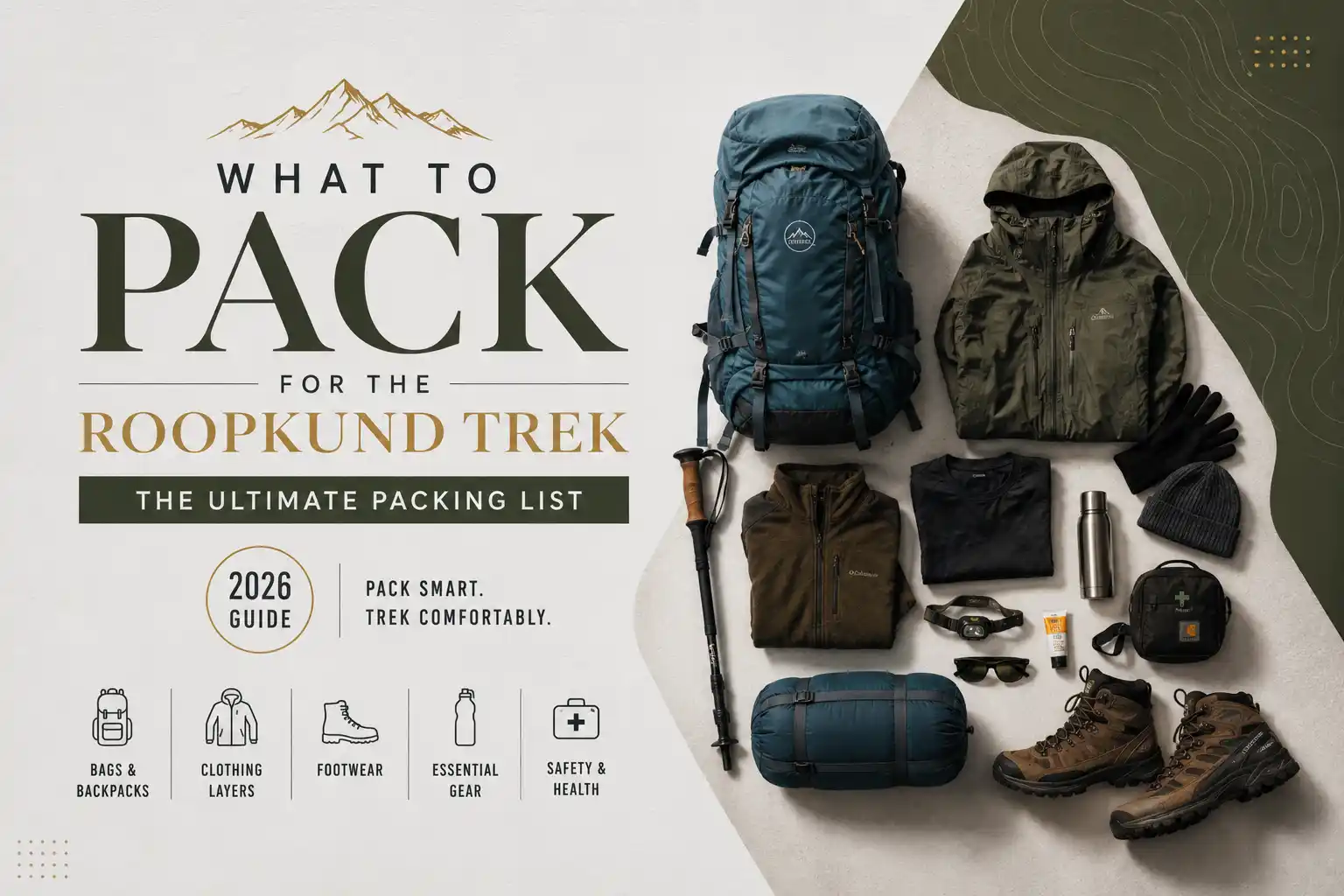
What to Pack for the Roopkund Trek: The Ultimate Packing List (2026 Guide)
“What if I forget something important?” It’s probably one of the first thoughts that crosses your mind after booking the Roopkund Trek. Unlike a normal holiday, trekking in the Himalayas doesn’t give you the luxury of buying forgotten items along the way. Once you leave the last village behind, your backpack becomes your lifeline. Everything you need for the next few days is on your shoulders. That doesn’t mean you should pack everything you own. In fact, the opposite is true. A heavy backpack can make steep climbs much more tiring, while an incomplete one can leave you cold, wet, or uncomfortable in unpredictable mountain weather. The trick is to strike the right balance—carry what you truly need and leave behind what you don’t. So, what should you pack for the Roopkund Trek?
This complete packing guide covers everything you’ll need, from clothing and trekking shoes to essential accessories, personal items, and a few things that many first-time trekkers forget. By the time you finish reading, you’ll know exactly how to prepare for one of India’s most iconic Himalayan adventures.
Why Packing Smart Matters on the Roopkund Trek
The Roopkund Trek takes you to an altitude of around 16,500 feet (5,029 metres). At this height, the weather can change surprisingly fast.
You may begin the morning in freezing temperatures, enjoy warm sunshine during the afternoon, and then find yourself layering up again as soon as the sun disappears behind the mountains. Besides that, the trail passes through forests, alpine meadows, rocky sections, and sometimes snow-covered terrain, depending on the season.
Because of these changing conditions, packing the right gear becomes just as important as preparing your body.
Fortunately, you don’t need expensive equipment or a mountaineering kit. A few well-chosen essentials are more than enough to keep you comfortable throughout the trek.
Dress in Layers Instead of Carrying One Heavy Jacket
One of the biggest mistakes first-time trekkers make is packing one bulky winter jacket and expecting it to work in every situation.
However, Himalayan weather rarely stays the same for long.
Instead, experienced trekkers always dress in layers. This approach allows you to add or remove clothing depending on the temperature, keeping you comfortable throughout the day.
Base Layer
Your base layer sits directly against your skin, so its main job is to keep sweat away from your body.
Ideally, you should pack:
- 2 quick-dry full-sleeve T-shirts
- 1 thermal upper
- 1 thermal lower
Try to avoid cotton clothing. Although it feels comfortable initially, it absorbs moisture and takes much longer to dry.
Mid Layer
Once you’ve added your base layer, you’ll need something to trap body heat.
A fleece jacket works perfectly while trekking because it keeps you warm without making you feel too hot. In addition, carrying one lightweight down or padded jacket is a good idea for chilly mornings and evenings around the campsite.
Outer Layer
Even if you’re trekking outside the monsoon season, mountain weather can surprise you.
Therefore, always carry:
- Waterproof rain jacket
- Waterproof rain pants or a poncho
A sudden shower is much easier to deal with when you already have rain protection packed.
Choose Comfortable Trekking Pants
When it comes to trekking pants, comfort matters far more than style.
Quick-dry trekking pants allow better movement, dry quickly after rain, and remain comfortable during long walking days.
For the Roopkund Trek, packing two trekking pants is usually enough. Besides that, keep one warm track pant for relaxing at the campsite after the day’s trek.
Jeans, on the other hand, are best left at home. They’re heavy, restrict movement, and become extremely uncomfortable if they get wet.
Invest in Good Trekking Shoes
If there’s one item worth spending money on, it’s your trekking shoes.
A reliable pair can make the difference between enjoying the trail and struggling through every kilometre.
Look for shoes that offer:
- Strong ankle support
- Excellent grip on rocky and muddy trails
- Water-resistant or waterproof protection
- Comfortable cushioning for long walks
More importantly, don’t wear brand-new shoes on the trek.
Instead, use them during your daily walks or weekend hikes for at least two weeks before your departure. This simple step helps prevent painful blisters later.
Don’t Forget Good Socks
Many people underestimate how important socks can be.
After walking for several hours, changing into a fresh, dry pair instantly makes your feet feel better.
A good packing plan includes:
- 3–4 pairs of trekking socks
- 2 pairs of thick woollen socks for nights
Since temperatures drop significantly after sunset, warm socks make sleeping much more comfortable.
Carry Gloves and Caps for Changing Weather
As you gain altitude, the temperature falls quickly.
Because of this, pack:
- One pair of fleece gloves
- Waterproof gloves if snow is expected
- One woollen cap or beanie
- One sun cap for daytime trekking
While many people remember to pack gloves, they often forget that a simple woollen cap helps retain body heat remarkably well.
Pick the Right Backpack
Choosing the right backpack is just as important as choosing the right gear.
For most trekkers, a 50–60 litre backpack provides enough space without becoming unnecessarily large.
Before buying or renting one, check that it has:
- Comfortable shoulder straps
- A padded hip belt
- Adjustable chest strap
- Rain cover
If your trek operator provides porter services, you can also carry a small daypack for water, snacks, and your camera.
Sleeping Gear
Fortunately, most organised trekking companies provide the bulky camping equipment.
This usually includes:
- Sleeping bag
- Sleeping bag liner
- Sleeping mat
- Tent
Even so, it’s always worth confirming these inclusions before your trek begins. That way, you won’t carry equipment you don’t actually need.
Essential Trekking Accessories
Although these items are small, they make a huge difference once you’re on the trail.
Your packing list should include:
- Trekking pole
- Headlamp with spare batteries
- UV-protection sunglasses
- Two reusable water bottles (2 litres total capacity)
- Microfibre towel
- Energy bars or dry fruits
- Thermos flask (optional but useful)
In addition, keep your phone in a waterproof pouch if rain is expected.
Toiletries You Should Carry
Rather than packing full-sized bottles, carry travel-sized toiletries to save space and reduce weight.
Your essentials should include:
- Toothbrush and toothpaste
- Biodegradable soap
- Sunscreen (SPF 50+)
- Lip balm
- Moisturiser
- Wet wipes
- Hand sanitiser
- Toilet paper
The mountain air is much drier than most people expect. As a result, sunscreen and lip balm quickly become daily essentials rather than optional items.
Pack a Small Personal Medical Kit
Although trek leaders always carry a first-aid kit, you should still keep your own basic medicines with you.
A simple medical pouch should contain:
- Personal prescription medicines
- ORS sachets
- Band-aids
- Antiseptic cream
- Pain relief medicine
- Anti-nausea tablets
- Any medication recommended by your doctor
If you’re considering medicines for altitude sickness, consult your doctor beforehand instead of self-medicating.
Keep Important Documents Safe
Before leaving home, place all important documents inside a waterproof pouch.
Don’t forget to carry:
- Government-issued photo ID
- Trek booking confirmation
- Medical certificate (if required)
- Emergency contact information
- Passport-size photographs
Meanwhile, saving digital copies on your phone is also a smart backup.
What You Should Leave at Home
Packing smart isn’t only about what goes into your backpack.
It’s also about knowing what doesn’t belong there.
Avoid carrying:
- Heavy suitcases
- Jeans
- Multiple bulky jackets
- Hair dryers
- Bluetooth speakers
- Expensive jewellery
- Unnecessary gadgets
- Large bottles of toiletries
Remember, every extra kilogram feels much heavier once you start climbing above 12,000 feet.
Can You Rent Trekking Gear?
Absolutely.
If this is your first Himalayan trek, buying every piece of equipment doesn’t always make financial sense.
Instead, many trekking operators offer quality rental gear, including:
- Trekking shoes
- Down jackets
- Trekking poles
- Rucksacks
- Ponchos
- Headlamps
- Gaiters
Renting allows you to use reliable equipment without spending a fortune on gear you may only use occasionally.
Quick Roopkund Trek Packing Checklist
Before you zip up your backpack, take one final look at this checklist.
Clothing
Quick-dry T-shirts, Thermal wear, Trekking pants, Fleece jacket, Down jacket, Rain jacket, Woollen cap, Gloves, Trekking socks
Footwear
Trekking shoes, Camp sandals or slippers
Essentials
Backpack with rain cover, Trekking pole, Headlamp, Sunglasses, Water bottles, Sunscreen, Lip balm, Personal medicines, Energy snacks, ID proof.
Final Thoughts
Knowing what to pack for the Roopkund Trek isn’t about carrying the most expensive gear or filling every corner of your backpack. Instead, it’s about making thoughtful choices that help you stay warm, comfortable, and prepared for whatever the mountains have in store.
A well-packed backpack gives you confidence. It keeps you comfortable during long trekking days, protects you from changing weather, and allows you to enjoy the journey without constantly worrying about forgotten essentials.
At the same time, remember that every item should earn its place. If something isn’t likely to be useful on the trail, it’s probably better left behind.
By packing wisely, you’ll spend less energy carrying unnecessary weight and more time soaking in everything that makes the Roopkund Trek unforgettable—from the lush meadows of Ali and Bedni Bugyal to the mysterious Skeleton Lake waiting high in the Garhwal Himalayas.
When the trail begins, your backpack should feel like a trusted companion, not a burden. Pack smart, travel light, and let the mountains take care of the rest.
Planning the Roopkund Trek and ready to book your spot? Contact us!
Follow us on Instagram for Regular Updates!

Recent Posts
Is Gulabi Kantha Trek Worth It? An Honest Guide for 2026


Is Kedarkantha Difficult for Beginners? An Honest 2026 Guide
Quick booking process
+91 9557062166