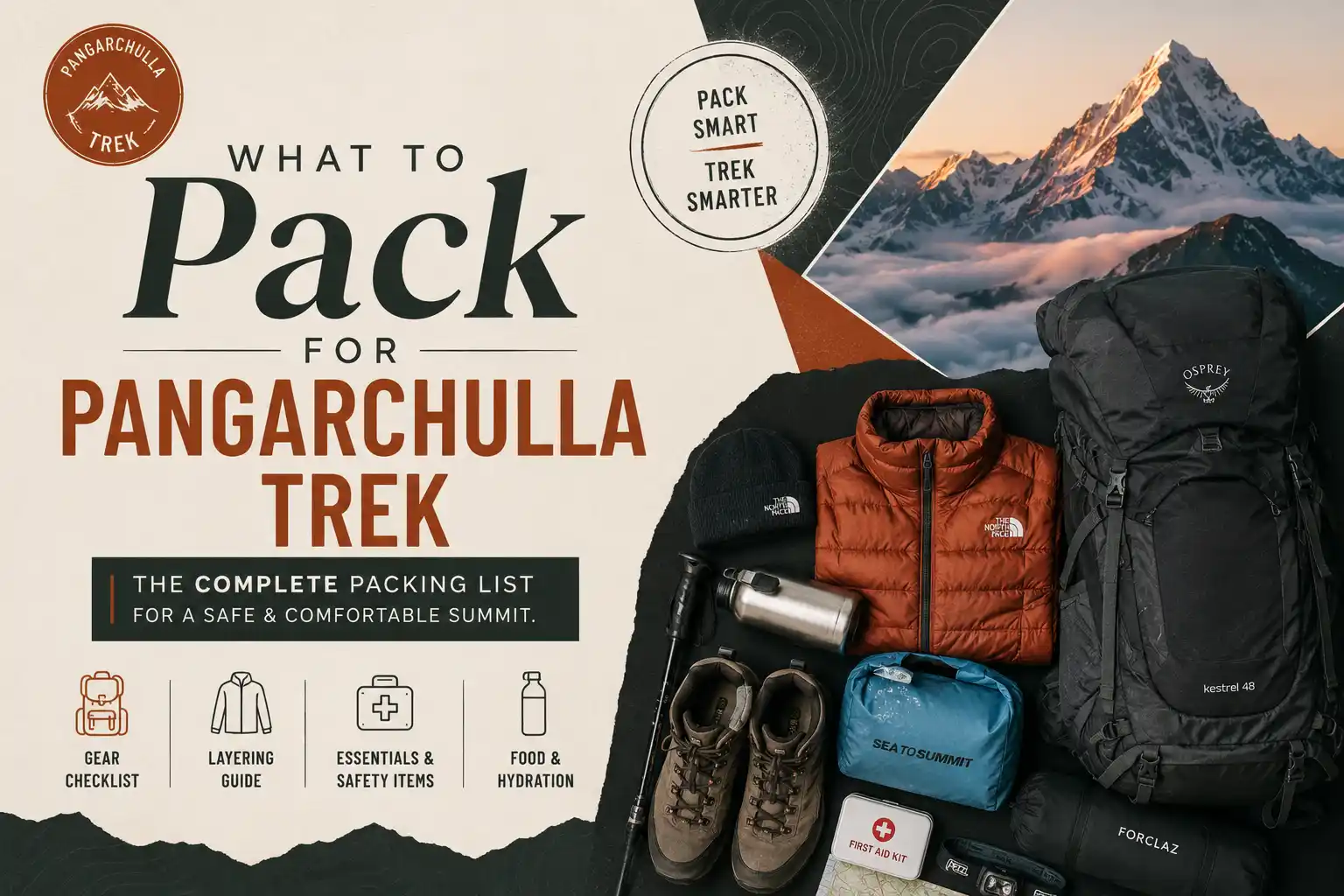
What to Pack for Pangarchulla Trek: The Complete Packing List for a Safe & Comfortable Summit
“I wish someone had told me to bring better gloves.” It’s a sentence you’ll hear surprisingly often from people who have completed the Pangarchulla Trek. Not because the trek is impossible without the right gear. But because Pangarchulla has a way of exposing the smallest packing mistakes. The mornings are cold enough to make your fingers numb. The afternoons can feel surprisingly warm while climbing through forests. The weather can change within minutes. And if you’re trekking during spring, you’ll likely encounter snow near the summit, making good footwear and proper layering even more important. That’s why packing for Pangarchulla isn’t about carrying more. It’s about carrying the right things. If you’re wondering what to pack for Pangarchulla Trek, this guide covers everything you’ll actually need—and just as importantly, what you can leave behind.
Why Packing Matters More on Pangarchulla Trek
Every Himalayan trek requires preparation, but Pangarchulla is slightly different.
Unlike beginner-friendly trails where small mistakes are often manageable, Pangarchulla combines long trekking days, high altitude, changing weather, and a demanding summit climb.
A forgotten rain jacket might simply be uncomfortable on another trek.
On Pangarchulla, it can turn a memorable day into a miserable one.
The goal isn’t to carry a heavy backpack full of “just in case” items.
The goal is to pack smart.
Every item should have a purpose.
Clothing: Think Layers, Not Heavy Jackets
One of the biggest mistakes first-time trekkers make is carrying one thick jacket and assuming it’ll be enough.
Mountain weather doesn’t work that way.
You’ll probably feel cold while leaving camp early in the morning, warm while climbing uphill, and cold again once you stop for breaks.
The easiest way to manage changing temperatures is by dressing in layers.
A moisture-wicking base layer keeps sweat away from your body.
A fleece provides insulation during colder sections.
A windproof or waterproof outer jacket protects you from wind, rain, and snow.
This layering system allows you to adjust your clothing throughout the day instead of overheating or freezing.
Trekking Shoes Can Make or Break the Experience
If there’s one item you shouldn’t compromise on, it’s your trekking shoes.
The Pangarchulla Trek includes rocky trails, forest paths, snow-covered sections in spring, and steep summit slopes.
A good pair of waterproof trekking shoes with strong grip provides confidence on uneven terrain and helps reduce the risk of slipping.
Equally important is breaking in your shoes before the trek.
Brand-new shoes may look perfect, but they often cause painful blisters after several hours of walking.
Your feet will thank you for choosing comfort over appearance.
The Backpack You Actually Need
For most trekkers, a 50–60 litre backpack is more than sufficient.
It should comfortably fit your clothes, personal gear, toiletries, and other essentials without becoming unnecessarily bulky.
Equally important is a rain cover.
Weather in the Himalayas changes quickly, and a backpack rain cover protects everything inside from unexpected showers or melting snow.
Even if rain isn’t forecast, carrying one is always a good idea.
Gloves Are More Important Than Most People Think
Summit morning usually begins before sunrise.
At higher altitudes, temperatures can drop well below what many trekkers expect.
A simple pair of woollen gloves may keep your hands warm around camp, but they aren’t always enough during cold, windy summit climbs.
A combination of inner fleece gloves and waterproof outer gloves works much better.
Warm hands make trekking significantly more comfortable.
Don’t Forget a Warm Cap and Sunglasses
Heat escapes quickly from your head.
A warm beanie or woollen cap becomes essential during early mornings and evenings around camp.
At the same time, don’t underestimate the mountain sun.
As you climb above the tree line, sunlight becomes much stronger.
If snow is present, sunlight reflecting from the surface can become uncomfortable for your eyes.
Good UV-protected sunglasses are one of the simplest yet most useful things to include when deciding what to pack for Pangarchulla Trek.
Personal Essentials You Should Always Carry
Some items are small enough to forget but important enough to affect your entire trek.
Carry a reusable water bottle or hydration bladder to stay hydrated throughout the day.
Keep sunscreen and lip balm easily accessible.
High-altitude sun and cold winds can quickly dry your skin.
Wet wipes, tissues, and a quick-dry towel are useful for maintaining basic hygiene during the trek.
A small headlamp with extra batteries is another essential, especially for the early morning summit climb.
When everyone else switches off their headlamp after sunrise, you’ll be glad you packed one.
Medicines and First-Aid
Your trek leader will usually carry a comprehensive first-aid kit.
However, you should always bring your personal medications.
If you take prescription medicine regularly, pack enough for the entire journey plus a little extra.
Simple items like pain relief tablets, bandages, blister patches, and medication recommended by your doctor can be reassuring to have in your backpack.
Snacks That Actually Help
The meals provided during organized treks are usually filling and nutritious.
Even so, carrying a few lightweight snacks is useful during long trekking days.
Dry fruits, trail mix, energy bars, roasted nuts, or dark chocolate provide quick energy without taking up much space.
Small snacks often make a noticeable difference during the demanding summit climb.
Things You Don’t Need to Carry
Packing smart also means knowing what to leave behind.
Many first-time trekkers overload their backpacks with unnecessary items.
Heavy jeans are uncomfortable for trekking and take a long time to dry.
Large perfume bottles, multiple pairs of shoes, bulky towels, excessive clothing, and expensive jewellery simply add weight without improving the experience.
Remember, every extra kilogram feels heavier as you gain altitude.
Travel light.
You’ll enjoy the trek far more.
Your Complete Pangarchulla Trek Packing Checklist
Before leaving home, make sure you have:
Clothing
- Moisture-wicking T-shirts
- Thermal base layers
- Fleece jacket
- Down or padded jacket
- Waterproof shell jacket
- Trekking pants
- Warm cap
- Sun cap
- Inner gloves
- Waterproof gloves
- Woollen socks
- Trekking socks
Footwear
- Waterproof trekking shoes
- Comfortable camp shoes or sandals
Gear
- 50–60 litre backpack
- Backpack rain cover
- Trekking pole
- Headlamp
- Sunglasses
- Reusable water bottle
- Personal toiletries
Personal Items
- Sunscreen (SPF 50+)
- Lip balm
- Wet wipes
- Tissues
- Personal medicines
- Energy snacks
- Identity proof
- Phone charger or power bank
Can You Rent Trekking Gear?
Yes.
If you’re doing the Pangarchulla Trek for the first time, there’s no need to purchase every piece of equipment.
Many trekking organizations and rental shops provide high-quality trekking gear, including jackets, trekking poles, gaiters, crampons or microspikes (when required), sleeping bags, and backpacks.
Renting gear is often more economical for first-time trekkers and ensures you have equipment that’s suitable for mountain conditions.
Final Thoughts
So, what to pack for Pangarchulla Trek ultimately comes down to one simple principle: prepare for changing mountain conditions without carrying unnecessary weight.
The right layers will keep you comfortable through cold mornings and sunny afternoons.
Good trekking shoes will give you confidence on rocky trails and snowy slopes.
A few carefully chosen essentials will make summit day far more enjoyable.
The Himalayas don’t expect you to carry everything.
They simply expect you to come prepared.
Pack wisely, travel light, and let your energy be spent exploring the mountains—not worrying about what you forgot at home.
Because when you’re standing on Pangarchulla Peak with the Garhwal Himalayas stretching endlessly before you, the last thing you’ll want is to be thinking about the gear you should have packed.
So now that you know what to pack for pangarchulla trek, are ready to book your spot? Contact us!
Follow us on Instagram for Regular Updates!

Recent Posts
Is Gulabi Kantha Trek Worth It? An Honest Guide for 2026

Is Kedarkantha Difficult for Beginners? An Honest 2026 Guide
Quick booking process
+91 9557062166