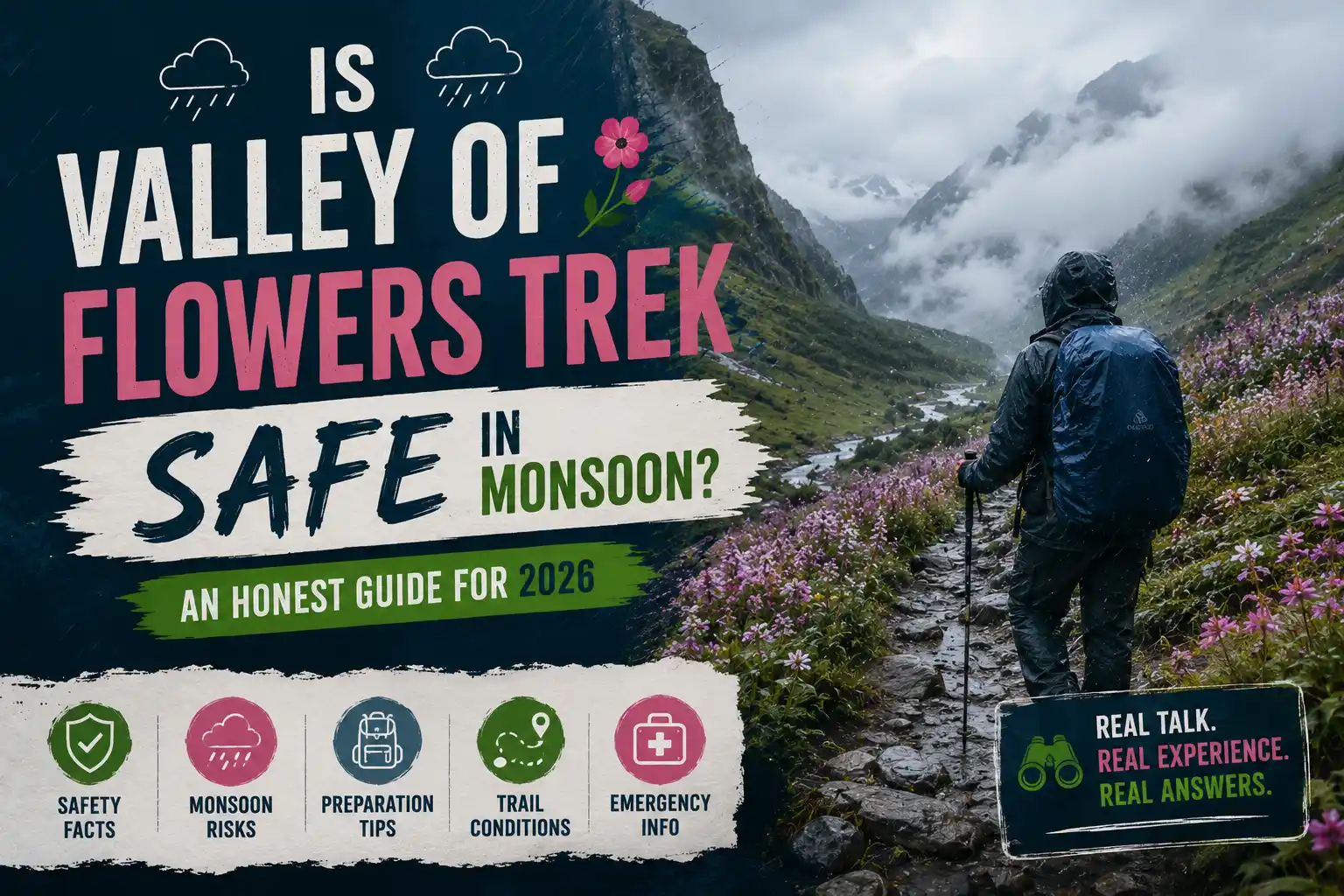
Is Valley of Flowers Trek Safe in Monsoon? An Honest Guide for 2026
“You’re planning a trek… during the monsoon?” If you’ve told your family or friends that you’re heading to the Valley of Flowers between July and August, chances are you’ve heard that question more than once. It’s a fair concern. After all, the words Himalayas and monsoon often bring to mind images of heavy rain, landslides, slippery trails, and cancelled trips. News headlines don’t help either. Every monsoon season, reports of road closures somewhere in the mountains make many travelers wonder whether trekking is even a good idea. So, is Valley of Flowers Trek safe in monsoon?
The short answer is yes—but only if you understand what monsoon trekking actually involves and prepare for it properly.
The Valley of Flowers isn’t just open during the monsoon—it actually depends on it. The rains are the reason this UNESCO World Heritage Site transforms into one of the most spectacular alpine landscapes in the world. Without the monsoon, there would be no carpets of wildflowers, no lush green meadows, and no waterfalls flowing through the valley.
Like any Himalayan journey, however, it comes with challenges. The goal isn’t to avoid those challenges entirely—it’s to be prepared for them.
Let’s look at what you can realistically expect.
Why the Valley of Flowers Opens During the Monsoon
Many first-time trekkers assume that monsoon is the worst time to visit the mountains.
Interestingly, the opposite is true for the Valley of Flowers.
The valley remains covered in snow for much of the year. As temperatures rise and the monsoon arrives, the snow melts, the soil becomes fertile, and hundreds of species of alpine flowers begin blooming in different stages.
This is why the trekking season usually runs from June to early October, with July and August being the peak flowering months.
In other words, if you’re visiting the Valley of Flowers, you’re naturally visiting during the monsoon.
The season isn’t something to avoid—it’s the reason the valley exists in its most beautiful form.
So, Is Valley of Flowers Trek Safe in Monsoon?
Yes, for most healthy travelers, the Valley of Flowers Trek is safe in monsoon when undertaken responsibly.
Thousands of trekkers, nature enthusiasts, photographers, and pilgrims complete the trek every year without any major issues.
The route is well-established, clearly marked, and remains actively managed throughout the official season.
However, “safe” does not mean “risk-free.”
Mountain weather is unpredictable, and monsoon conditions require a little more planning than a summer holiday.
The safest trekkers are usually not the strongest—they’re the ones who respect the mountains and travel prepared.
Understanding the Real Risks
The internet often exaggerates monsoon trekking by making it sound either completely dangerous or completely effortless.
The reality lies somewhere in the middle.
Slippery Trails
The trail between Govindghat, Ghangaria, and the Valley of Flowers receives frequent rainfall.
Stone steps, muddy sections, and wet pathways can become slippery.
This doesn’t make the trek unsafe, but it does mean you need proper trekking shoes with good grip instead of casual sneakers.
Walking slowly and maintaining your balance is far more important than trying to move quickly.
Road Delays
One of the biggest challenges isn’t actually the trek itself.
It’s reaching the trek.
Roads in Uttarakhand occasionally experience landslides during the monsoon, particularly after prolonged heavy rainfall.
These delays can affect travel between Rishikesh, Joshimath, and Govindghat.
This is why experienced travelers always keep at least one extra buffer day in their itinerary.
That single decision can save you a great deal of stress.
Rain Is Part of the Experience
If you’re hoping to complete the Valley of Flowers Trek without getting wet, you’ll probably be disappointed.
Rain is part of the journey.
Some days you’ll walk through light drizzles.
Other days the clouds may clear completely.
And occasionally, you’ll experience short bursts of heavier rain.
The good news is that rain also brings the valley to life.
The waterfalls become more dramatic, the greenery becomes richer, and the flowers appear fresher after every shower.
Why Most Experienced Trekkers Still Choose Monsoon
It might seem surprising, but many experienced trekkers actually prefer visiting during the monsoon.
Why?
Because this is when the Valley of Flowers truly earns its name.
The meadows are covered with blooming alpine flowers, streams flow with fresh glacial water, clouds drift across the surrounding peaks, and the entire valley feels alive.
Visit too early and many flowers haven’t bloomed.
Visit too late and many have already faded.
For this reason, the monsoon remains the most rewarding season despite its occasional inconveniences.
What Makes the Trek Safer?
Safety on any Himalayan trek depends far more on preparation than luck.
Simple decisions make a huge difference.
Wear waterproof trekking shoes with good grip.
Carry a reliable rain jacket instead of depending on disposable ponchos.
Use a backpack rain cover to keep your clothes and electronics dry.
Start trekking early each morning before afternoon showers become more frequent.
Most importantly, listen to local authorities and trek leaders if weather conditions change.
The mountains have their own schedule.
There’s no reason to rush them.
Is Altitude a Bigger Concern Than Rain?
Many people focus entirely on the monsoon and forget about altitude.
The Valley of Flowers reaches approximately 3,600 metres above sea level.
While it is considered a beginner-friendly Himalayan trek, some visitors may still experience mild symptoms of altitude, especially if they ascend too quickly.
Staying hydrated, maintaining a comfortable pace, eating well, and avoiding unnecessary exertion usually help your body adjust.
For most healthy travelers, altitude is manageable when approached sensibly.
Who Should Avoid the Trek During Monsoon?
Although the Valley of Flowers Trek is generally safe in monsoon, it may not be suitable for everyone.
You may want to reconsider your plans if:
- You have a serious heart or respiratory condition.
- Your doctor has advised against high-altitude travel.
- You are uncomfortable walking on wet and uneven terrain.
- You are unable to accommodate possible weather-related delays.
In such situations, it’s always better to postpone rather than push through.
The valley will still be there next season.
Why Preparation Matters More Than Fitness Alone
Many people believe that being physically fit automatically makes a trek safe.
Fitness certainly helps, but preparation is equally important.
Understanding the route, carrying the right gear, checking weather forecasts, and respecting mountain conditions often contribute more to safety than raw physical strength.
The most experienced trekkers aren’t necessarily the fastest.
They’re the ones who make smart decisions.
The Reward Is Worth the Rain
There are very few places in India where nature transforms so dramatically over such a short period.
Every rainfall brings new colours to the valley.
Waterfalls grow stronger.
Fresh flowers bloom.
Clouds roll across distant peaks before revealing spectacular Himalayan views.
These constantly changing landscapes are exactly why photographers, botanists, and trekkers return year after year.
The rain isn’t simply something you tolerate.
It’s part of what makes the experience unforgettable.
Final Thoughts
So, is Valley of Flowers Trek safe in monsoon?
Yes—provided you travel during the official trekking season, carry appropriate gear, allow flexibility in your itinerary, and respect the mountains.
Monsoon is not the enemy of the Valley of Flowers.
It is the reason this extraordinary landscape exists.
If you arrive expecting sunshine every day, you’ll probably leave disappointed.
But if you embrace the changing weather, the misty forests, the sound of rain on the trail, and the endless blooms that only the monsoon can create, you’ll understand why this trek remains one of the most magical experiences in the Indian Himalayas.
Sometimes, the most beautiful journeys begin with a little rain.
Planning your VOF Trek and ready to book your spot? Contact us!
Follow us on Instagram for Regular Updates!

Recent Posts
Is Gulabi Kantha Trek Worth It? An Honest Guide for 2026

Is Kedarkantha Difficult for Beginners? An Honest 2026 Guide
Quick booking process
+91 9557062166