How to Prepare for a Snow Trek: Fitness, Clothing, Gear & Essential Tips
A snow trek looks magical in photographs. Walking through a forest covered in fresh snow, waking up to white mountains and watching the sunrise from a frozen trail can be an unforgettable experience. But if you don’t know how to prepare for a snow trek, preparation matters more than it does on an ordinary hike. Cold temperatures, slippery trails, snow-covered terrain and shorter daylight hours can make a familiar route feel completely different.
The good news? You don’t need to be an athlete to enjoy a snow trek.
You simply need to prepare for the conditions you’re going to face.
Whether you’re planning Kedarkantha, Gulabi Kantha, Dayara Bugyal, Brahmatal, Kuari Pass or Chandrashila, this guide will help you understand how to prepare for a snow trek without overcomplicating it.
What Makes a Snow Trek Different?
Before preparing for a snow trek, it’s worth understanding why winter trekking requires a little more planning.
Walking on snow takes more effort than walking on a normal trail. Your feet can sink into soft snow, icy sections can become slippery and cold temperatures can make your body work harder to stay warm.
Then there is the altitude.
Most popular Himalayan snow treks take you well above the altitude you’re used to at home. Your body needs time to adjust, especially when you’re travelling from the plains directly into the mountains.
Even something as simple as getting dressed becomes a small strategy.
You want enough layers to stay warm, but you don’t want to carry unnecessary weight. You need protection from snow, but you also need clothing that lets sweat escape when you’re climbing.
That’s why good preparation is less about buying expensive gear and more about understanding what the mountain is going to ask from you.
How to Prepare for a Snow Trek
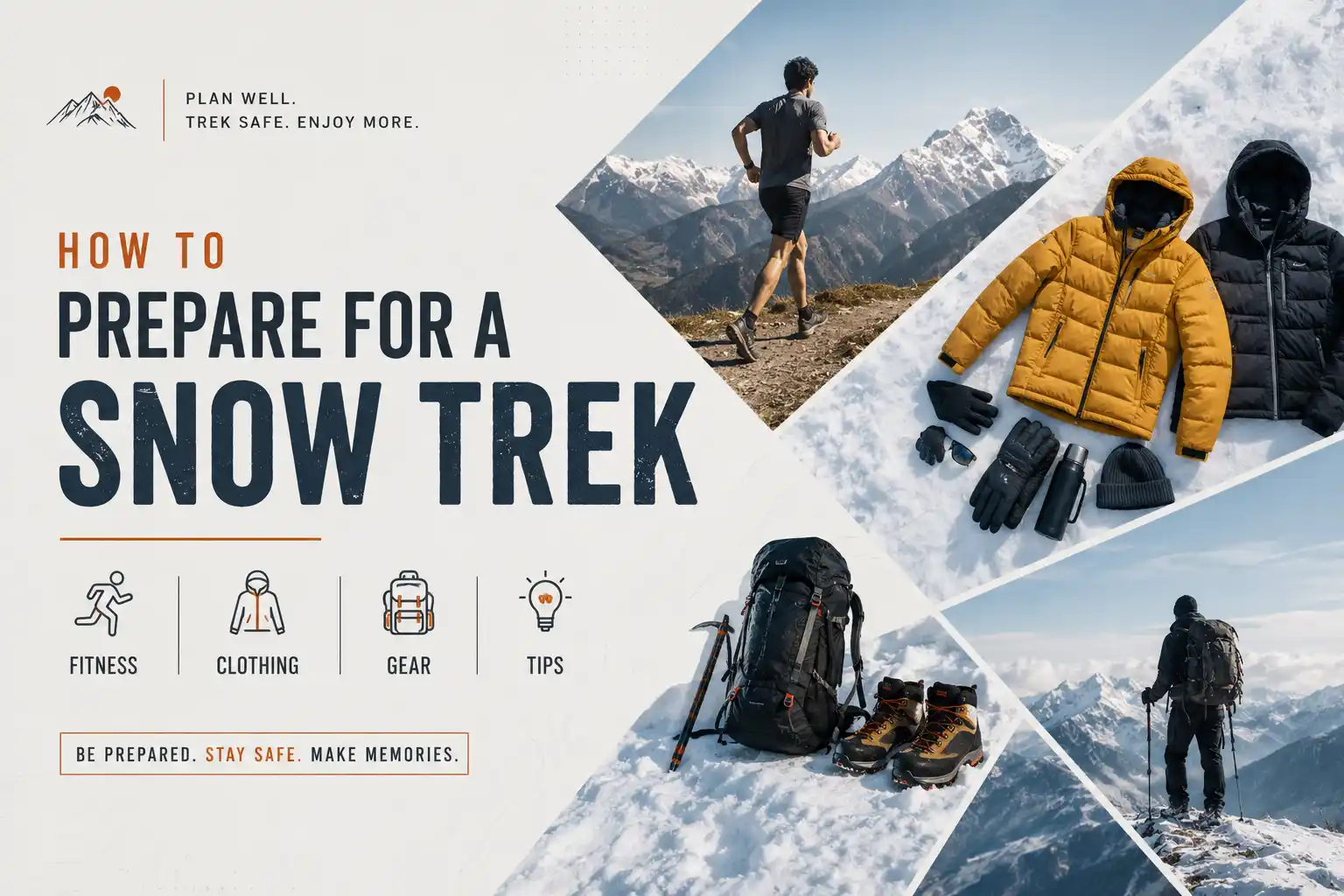
A good snow trek preparation plan has four main parts:
Fitness.
Your legs and lungs need to handle several hours of walking.
Clothing.
You need layers that keep you warm without making you overheat.
Gear.
Your footwear and basic winter equipment need to match the trail conditions.
Mindset.
Snow trekking is slower and more tiring than walking on a dry trail. Patience matters.
Get these four things right and you’ll already be much better prepared.
Start Training Before Your Snow Trek
You don’t need a complicated gym programme.
What matters most is building leg strength and cardiovascular endurance.
Start by walking regularly. As your trek gets closer, gradually increase the distance and include some uphill walking whenever possible.
Stairs are particularly useful if you live somewhere without access to hills.
Try building your routine around:
- Brisk walking
- Stair climbing
- Squats
- Lunges
- Step-ups
- Calf raises
- Planks
Don’t suddenly start doing extremely long workouts a few days before departure. That can leave you sore or exhausted before the trek even begins.
Instead, increase your workload gradually.
A good rule is simple: train consistently rather than training desperately.
Practice Walking With a Backpack
Here’s something many first-time trekkers overlook.
Walking for two hours without a backpack is very different from walking for two hours with one.
Before your snow trek, take some training walks carrying a backpack similar to what you’ll use on the actual trek.
You don’t need to load it with unnecessary weight. The goal is simply to get your shoulders, back and legs used to walking with a load.
This also gives you a chance to adjust the backpack before you’re standing at a snowy campsite wondering why one shoulder hurts more than the other.
Get the Right Shoes for Snow
Your trekking shoes are arguably the most important piece of equipment on a snow trek.
Look for footwear with:
- Good grip
- Ankle support
- Adequate insulation
- Water resistance
- A comfortable fit
Avoid wearing brand-new shoes for the first time on the mountain.
Break them in beforehand.
A shoe that feels fine inside a shop can cause painful blisters after several hours of walking. Your feet are going to be doing most of the work, so give them some attention before you leave.
Depending on the trail and current conditions, your trek operator may also recommend microspikes or other traction equipment for icy sections.
Learn How to Dress for a Snow Trek
One enormous jacket isn’t necessarily the answer.
For a snow trek, layering works much better.
A basic system can include:
Base layer:
Moves sweat away from your skin.
Mid layer:
Provides insulation and warmth.
Outer layer:
Protects you from wind, snow and moisture.
This lets you adjust your clothing throughout the day.
During a steep climb, you might feel surprisingly warm even when the temperature is below freezing. When you stop for a break, however, the cold can return quickly.
Layering allows you to adapt instead of either freezing or sweating through your clothes.
Don’t Forget Your Hands, Feet and Head
People often focus on their jacket and forget the smaller things.
That’s a mistake.
Your extremities can get cold quickly, so pack proper gloves, woollen socks and a warm cap or beanie.
Carry an extra pair of socks as well. Wet socks inside cold shoes are a miserable combination.
A neck warmer or buff can also be useful when the wind picks up.
And remember: winter sunlight can be intense, particularly when it reflects off snow.
A good pair of sunglasses is essential.
Pack Light, But Don’t Skip the Essentials
There’s a strange temptation before a winter trek to pack everything you own.
Resist it.
Your backpack is going to feel heavier with every kilometre, especially when you’re climbing through snow.
Instead, focus on the essentials:
- Thermal layers
- Fleece or insulating layer
- Waterproof outer layer
- Trekking shoes
- Warm socks
- Gloves
- Beanie
- Sunglasses
- Sunscreen
- Water bottle
- Personal medicines
- Headlamp
- Basic toiletries
- Small personal first-aid supplies
Your exact packing list should depend on the trek, season and current weather conditions.
For example, preparing for a Kedarkantha snow trek in January can require different equipment from a lower-altitude winter hike.
Stay Hydrated Even When It’s Cold
You may not feel as thirsty during winter as you do in summer.
That doesn’t mean your body doesn’t need water.
You’re still losing fluids through breathing, sweating and physical activity. At altitude, staying properly hydrated becomes even more important.
Take regular small sips instead of waiting until you’re extremely thirsty.
An insulated bottle can also be useful because water can become very cold or even freeze in harsh winter conditions.
Protect Yourself From the Sun
Snow makes winter sunlight deceptive.
The air might be freezing while the sun feels surprisingly strong.
Because snow reflects sunlight, your face and eyes can receive significant exposure during the day.
Pack:
Sunscreen.
Lip balm with sun protection.
UV-protection sunglasses.
Apply sunscreen even when the sky looks cloudy.
You don’t want your first evening at camp to be spent discovering that your face has turned into the exact colour of a boiled tomato.
Prepare for Altitude as Well as Cold
Snow isn’t the only challenge.
Many Himalayan snow treks take you to high elevations, and altitude can affect people differently.
Take the ascent seriously.
Walk at a steady pace rather than racing ahead. Drink enough water and give your body time to adjust. If you feel unwell at altitude, tell your trek leader rather than trying to hide it because you don’t want to slow the group down.
Your trek leader and support team can assess the situation and decide what needs to happen next.
A beautiful summit is never worth ignoring serious symptoms.
Check the Weather Before You Leave
Mountain weather can change quickly.
Before starting your snow trek, check the latest weather forecast and, more importantly, ask your trek operator about the actual trail conditions.
A weather app might tell you that it’s going to snow.
It won’t necessarily tell you how much snow is currently on a particular section of the trail or whether an icy patch has formed after previous snowfall.
That’s why local information matters.
At THE DREAM TREKS, our team monitors route conditions and plans the trek according to the season and terrain rather than treating every winter departure as identical.
Don’t Expect to Walk at Summer Speed
This is probably the biggest mental adjustment you’ll need to make.
Snow slows you down.
Sometimes considerably.
Your feet may sink with every step. You may need to use traction equipment. The trail can become harder to follow and your body will spend more energy simply staying warm.
So don’t compare your winter pace with the distance you can cover during a summer hike.
Take shorter steps.
Maintain a comfortable rhythm.
Rest when necessary.
And let the trek unfold at its own pace.
There’s no prize for reaching camp exhausted two hours before everyone else.
Trek With an Experienced Team
A snow trek isn’t the best place to experiment with mountain logistics for the first time.
Routes can change with snowfall. Weather can affect campsites and road access. Snow-covered trails can also look very different from the same trail during summer.
Travelling with an organised trek team means you have people who understand the route, monitor conditions and manage the logistics around your trek.
At THE DREAM TREKS, our winter trekking experiences include planned transportation, accommodation, meals and trek support. The goal is to let you focus on walking and enjoying the mountains while our team handles the practical side of the journey.
Common Snow Trek Mistakes to Avoid
A little preparation can prevent a lot of discomfort.
Don’t wear regular sports shoes.
They aren’t designed for snowy and icy mountain trails.
Don’t buy new shoes immediately before the trek.
Break them in first.
Don’t overpack.
Every unnecessary item becomes extra weight.
Don’t skip breakfast.
You’ll need energy for a long day in cold conditions.
Don’t ignore discomfort.
Tell your trek leader if something doesn’t feel right.
Don’t rush uphill.
A steady pace is more sustainable.
Don’t assume there will always be deep snow.
Conditions vary from season to season.
How Fit Do You Need to Be for a Snow Trek?
You don’t need to be extremely fit to enjoy every snow trek.
However, you should be comfortable walking for several hours at a time and handling uphill sections.
Your preparation should match the difficulty of the trek.
For a relatively accessible winter route such as Dayara Bugyal, a reasonable fitness base can be enough for many beginners.
A trek such as Kedarkantha requires more sustained uphill walking, while routes such as Kuari Pass demand greater endurance.
The important thing is to choose a trek that matches your current fitness rather than choosing one simply because the photographs look amazing.
Which Snow Treks Can You Try in Uttarakhand?
If you’re planning your first winter adventure, Uttarakhand has several excellent options.
Kedarkantha is a classic choice for a first proper snow trek and summit experience.
Gulabi Kantha offers a quieter alternative with beautiful winter landscapes.
Dayara Bugyal is known for its vast snow-covered meadows.
Brahmatal combines snowy trails with the experience of a high-altitude lake.
Kuari Pass is a stronger option for trekkers looking for bigger Himalayan views and a more demanding route.
Chandrashila is a shorter trek that can deliver a memorable winter summit experience around Chopta and Tungnath.
Whichever route you choose, preparation should come before the Instagram photographs.
Ready for Your First Snow Trek?
A snow trek doesn’t require you to become an expert mountaineer.
It requires something much simpler: prepare properly, respect the mountains and know what you’re getting into.
Train your legs. Break in your shoes. Learn how to layer. Pack intelligently. Stay hydrated. Check the weather. And most importantly, don’t underestimate the conditions simply because the trail looks beautiful in photographs.
If you’re planning Kedarkantha, Gulabi Kantha, Dayara Bugyal, Brahmatal, Kuari Pass or Chandrashila, THE DREAM TREKS can help you plan the complete experience, from transportation and accommodation to trek support.
The snow will do its part.
You just need to be ready for it.
Planning a winter trek this season and ready to book your spot? Contact us!
Follow us on Instagram for Regular Updates!

Recent Posts

Best Snow Treks in Uttarakhand for Winter 2026–27
Quick booking process
+91 9557062166