
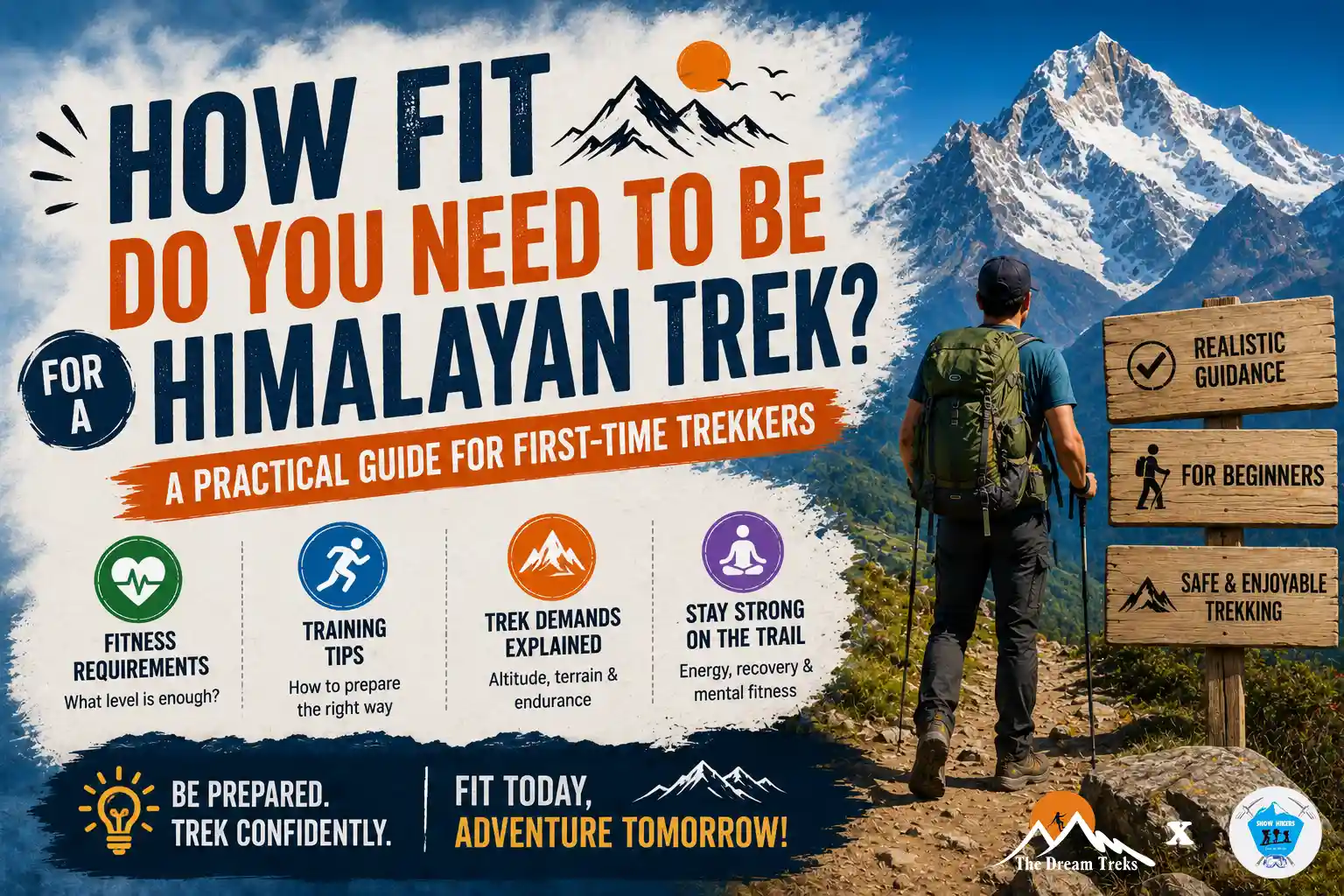
How Fit Do You Need to Be for a Himalayan Trek? A Practical Guide for First-Time Trekkers
One of the biggest misconceptions about trekking in the Himalayas is that only highly athletic people can do it. Scroll through social media and you’ll see trekkers standing on snowy ridges, crossing mountain passes, or posing in front of towering Himalayan peaks. It’s easy to assume that everyone completing these treks must be a marathon runner, a gym enthusiast, or someone with years of outdoor experience. The reality is very different. Every year, thousands of ordinary people complete Himalayan treks. Teachers, office workers, students, photographers, retirees, and people who had never trekked before successfully reach destinations they once thought were impossible. So the real question isn’t whether you need to be an athlete. The real question is: How fit do you need to be for a Himalayan trek?
The answer depends on the trek, your preparation, and your expectations. But if you’re wondering whether your current fitness level is enough, this guide will help you understand exactly what Himalayan trekking demands and how you can prepare for it.
The Truth About Fitness for a Himalayan Trek
Most beginners worry about the wrong things.
They focus on muscular strength, gym performance, or body weight. While these factors matter to some extent, they are not what determines success on a trek.
The biggest challenge on a Himalayan trek is endurance.
Unlike a workout that lasts an hour, trekking involves walking for several hours every day, often on steep terrain, sometimes at high altitude, while carrying a backpack.
A person who can comfortably walk for six hours at a steady pace is often better prepared for trekking than someone who can lift heavy weights but rarely does any cardio.
That is why experienced trek leaders often say that fitness for a Himalayan trek is less about strength and more about sustained effort.
Why Himalayan Treks Feel Harder Than Normal Walks
Many first-time trekkers compare trekking to walking in a city park.
That comparison disappears quickly on the first day of a mountain trek.
The Himalayas add several challenges that your body does not normally experience.
You are often walking uphill for long periods. The terrain is uneven. The weather changes rapidly. Temperatures can drop unexpectedly. And as you gain altitude, oxygen levels gradually decrease.
A trail that looks simple on paper can feel surprisingly demanding because of these combined factors.
This is why fitness for a Himalayan trek cannot be judged simply by asking whether you can walk a few kilometers on flat ground.
What Level of Fitness Do You Actually Need?
The answer depends on the type of trek you plan to do.
Easy Treks
Treks such as Nag Tibba, Chopta Tungnath, Dayara Bugyal, and certain sections of Valley of Flowers are considered beginner-friendly.
For these treks, you should ideally be able to:
- Walk 5–6 kilometers comfortably.
- Climb stairs without excessive fatigue.
- Stay active for several hours during the day.
You don’t need exceptional fitness, but some preparation helps significantly.
Moderate Treks
Treks such as Hampta Pass, Kedarkantha, Har Ki Dun, and Brahmatal require a higher level of endurance.
For these treks, a good benchmark is:
- Jogging 5 kilometers comfortably.
- Walking 10 kilometers in a day without exhaustion.
- Climbing multiple flights of stairs continuously.
Most trekking organizations consider this a reasonable fitness level for a Himalayan trek in the moderate category.
Difficult Treks
Treks such as Rupin Pass, Pin Parvati, Goechala, and other high-altitude expeditions require significantly stronger endurance.
These treks involve:
- Long walking days.
- Greater altitude gain.
- More demanding terrain.
- Reduced oxygen levels.
For such treks, consistent training becomes essential rather than optional.
The Biggest Myth: “I Go to the Gym, So I’m Trek Ready”
This is probably the most common mistake beginners make.
Being fit in the gym does not automatically mean you’re fit for a Himalayan trek.
You may have excellent strength but struggle after three hours of continuous uphill walking.
Trekking fitness is highly specific.
Your body needs to adapt to:
- Continuous movement.
- Long-duration effort.
- Altitude.
- Uneven terrain.
- Recovery over multiple days.
A person who regularly runs, hikes, cycles, or walks long distances often adapts to trekking faster than someone whose training focuses only on weightlifting.
Can Beginners Do a Himalayan Trek?
Absolutely.
In fact, many of the most popular Himalayan treks are designed with beginners in mind.
Thousands of first-time trekkers complete routes such as Valley of Flowers, Hampta Pass, Kedarkantha, and Dayara Bugyal every year. The key difference between those who enjoy the experience and those who struggle is preparation.
You do not need previous trekking experience.
You do not need mountaineering skills.
You do not need expensive equipment.
You simply need enough fitness for a Himalayan trek and the willingness to prepare before your departure.
Altitude Changes Everything
One reason fitness for a Himalayan trek feels different from regular exercise is altitude.
As you climb higher, the amount of oxygen available decreases.
Your muscles receive less oxygen with each breath, which means even simple tasks begin to feel harder.
This is why people who are very fit can still struggle at altitude, while moderately fit trekkers who pace themselves properly often perform well.
Good fitness helps, but acclimatization and pacing are equally important.
How to Know If You’re Trek Ready
Instead of focusing on weight or gym numbers, ask yourself these questions:
Can you walk continuously for two hours?
Can you climb stairs without needing frequent breaks?
Can you complete a 5-kilometer run or brisk walk comfortably?
Can you stay active for an entire day without feeling exhausted?
If your answer is yes to most of these questions, you already have a solid foundation.
You may not be fully trek-ready yet, but you’re much closer than you think.
The Best Exercises for Himalayan Trek Preparation
When people ask about fitness for a Himalayan trek, they’re often looking for the perfect workout.
The truth is that simple exercises work remarkably well.
Walking
Never underestimate walking.
A daily brisk walk remains one of the best ways to prepare for trekking.
Stair Climbing
Stairs mimic uphill trekking surprisingly well.
Many experienced trek leaders recommend stair climbing as one of the most effective preparation exercises.
Running or Jogging
Running improves cardiovascular endurance, which becomes extremely important on long trekking days.
Strength Training
Focus on:
- Squats
- Lunges
- Step-ups
- Planks
These exercises strengthen the muscles most commonly used during trekking.
How Long Should You Train Before a Trek?
Ideally, start preparing at least six to eight weeks before departure.
This gives your body enough time to gradually improve endurance and strength without risking injury.
If you’re already active, four weeks may be sufficient for beginner treks.
If you’re starting from scratch, giving yourself two to three months is even better.
Mental Fitness Matters Too
Physical preparation is only part of the equation.
Every experienced trekker knows that difficult moments happen on every trek.
You might encounter rain.
You might feel tired.
You might question why you signed up in the first place.
Mental resilience often becomes just as important as physical endurance.
The ability to stay positive, maintain a steady pace, and keep moving forward can make a huge difference.
Many trekkers discover that the mountains challenge their mindset as much as their body.
So, How Fit Do You Really Need to Be for a Himalayan Trek?
Probably less fit than you imagine.
Most Himalayan treks are not reserved for elite athletes.
They are designed for ordinary people willing to prepare properly.
If you can build basic endurance, strengthen your legs, improve your cardiovascular fitness, and train consistently for a few weeks, you can successfully complete many beginner and moderate Himalayan treks.
The mountains do not reward speed.
They reward patience, preparation, and persistence.
And that’s good news because those qualities are available to almost everyone.
Final Thoughts on How fit do you need to be for a Himalayan Trek
The question isn’t whether you’re fit enough for a Himalayan trek today.
The better question is whether you’re willing to prepare for one.
You don’t need six-pack abs.
You don’t need marathon-level endurance.
You don’t need years of trekking experience.
What you need is a reasonable level of fitness for a Himalayan trek, a few weeks of focused preparation, and the determination to keep putting one foot in front of the other.
Because in the Himalayas, success rarely belongs to the strongest person on the trail.
More often, it belongs to the person who simply keeps going.
Planning your Trek and ready to book your spot? Contact us!
Follow us on Instagram for Regular Updates!

One thought on “How Fit Do You Need to Be for a Himalayan Trek? A Practical Guide for First-Time Trekkers”
Add a Comment Cancel reply
Recent Posts

Is Gulabi Kantha Trek Worth It? An Honest Guide for 2026


Is Kedarkantha Difficult for Beginners? An Honest 2026 Guide
Quick booking process
+91 9557062166

Great content! Keep up the good work!