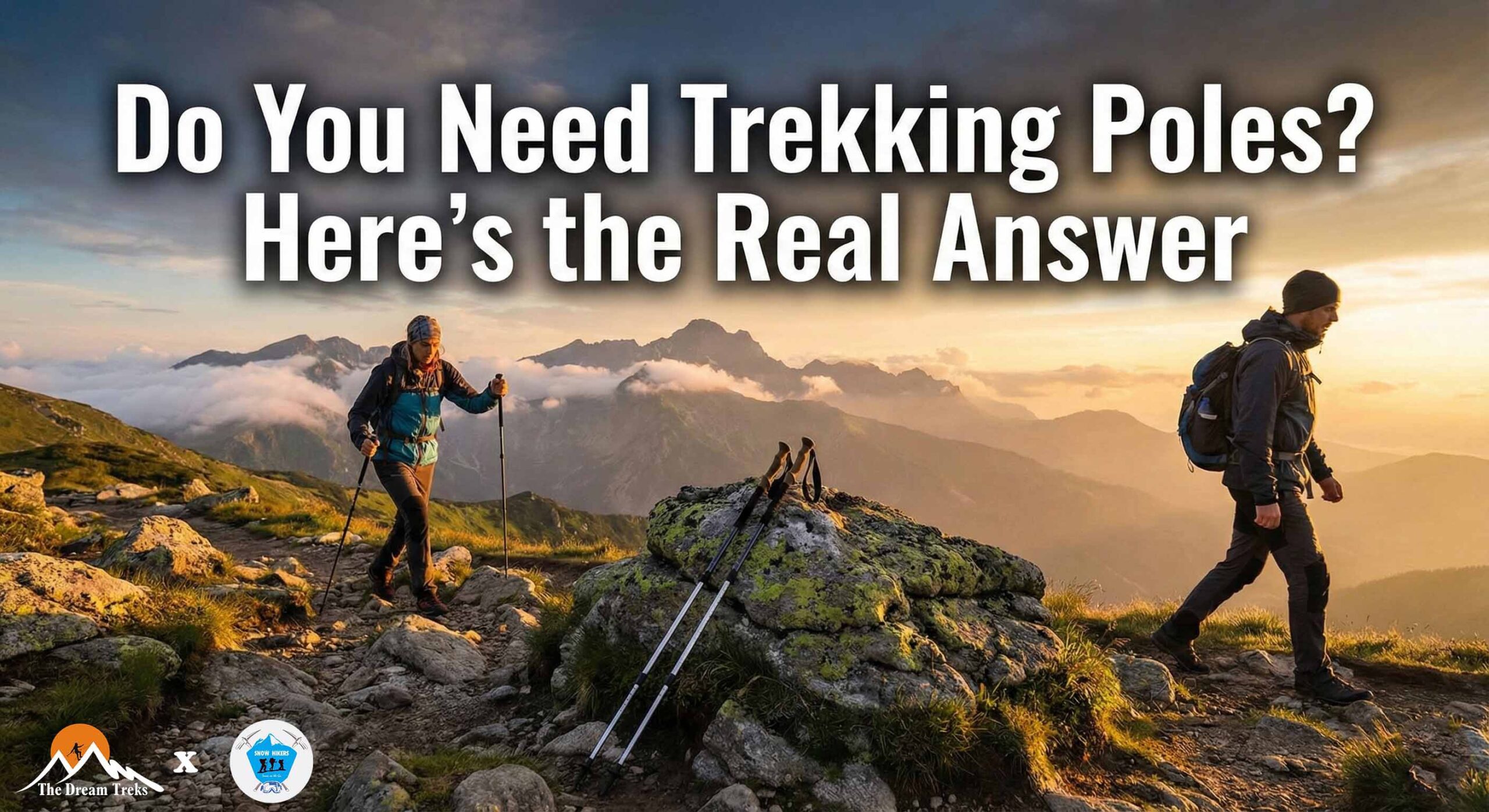
Do You Need Trekking Poles? Here’s the Real Answer
Trekking poles are one of the most debated pieces of trekking gear. Some trekkers swear by them, while others feel they’re unnecessary extra weight. So what’s the truth — do you really need trekking poles?
The short answer: YES, trekking poles can significantly improve your safety, comfort, and efficiency on any Himalayan trek.
Whether you’re trekking to Kedarkantha, Dayara Bugyal, Brahmatal, or any other high-altitude trail, poles can make a massive difference in your overall trekking experience.
In this blog, we break down the real benefits, when you actually need them, and how to choose the right pair.
What Do Trekking Poles Actually Do?
Trekking poles offer stability and support on the trail. They act like a “third leg,” helping distribute your weight and reducing the strain on your knees, ankles, and lower back.
Here’s what they help with:
- Balance on uneven terrain
- Reduced pressure on knees
- Less fatigue during long climbs
- Better grip on snow or slippery paths
- Improved pace and rhythm
Many trekkers don’t realise this until they actually try them on a challenging climb.
7 Major Benefits of Using Trekking Poles
1. Reduces Knee & Joint Strain
During steep descents (like the one on the Kedarkantha trek), your knees take most of the impact. Poles absorb a large portion of that shock — saving your joints from unnecessary stress.
2. Provides Stability on Slippery Terrain
Snow, loose stones, mud, and water crossings are common on Himalayan treks. Trekking poles help maintain balance and prevent slips.
3. Helps You Maintain a Steady Pace
Poles create a natural rhythm, allowing you to trek efficiently without draining energy.
4. Distributes Weight Evenly
Instead of your legs doing all the work, poles share the load with your arms. This reduces overall fatigue.
5. Improves Safety on Snowy Trails
During winter treks, trekking poles paired with microspikes and gaiters give you far better control while walking.
6. Supports You During River or Stream Crossings
Treks like Kedarkantha, Har Ki Dun, and Gaumukh often involve crossing small streams. Poles help you find firm footing.
7. Keeps You Upright on Steep Ascents
Climbing uphill becomes much easier with poles because they give you extra thrust and stability.
When Do You Definitely Need Trekking Poles?
You should strongly consider carrying trekking poles if:
- You’re doing a snow trek
- You have knee pain or previous injuries
- You’re a beginner with less balance and leg strength
- You’re trekking with a heavy backpack
- You’re on a trek with steep ascents/descents (like Kedarkantha, Rupin Pass, Hampta Pass)
For Himalayan treks, poles are more of a necessity than an optional item.
When Trekking Poles Might Not Be Necessary
You probably don’t need poles if:
- The trail is completely flat
- It’s a short nature walk
- You prefer trekking without support
But in the mountains, these situations rarely apply.
Types of Trekking Poles — Which One Should You Buy?
When choosing trekking poles, consider these factors:
1. Adjustable vs. Fixed-Length Poles
- Adjustable poles are most preferred for Himalayan treks.
- You can extend them on climbs and shorten them on descents.
2. Aluminum vs. Carbon Fiber
- Aluminum poles → stronger & affordable
- Carbon fiber poles → lighter but can break under heavy pressure
For most trekkers, aluminum is the best option.
3. Anti-Shock Poles
These have shock absorbers, reducing impact on your wrists and elbows.
Useful but slightly heavier.
4. Grip Type
- Cork grips → most comfortable, best for long treks
- Rubber grips → good for winter, prevents slipping
- Foam grips → lightweight & comfortable
How to Use Trekking Poles Properly (Beginners’ Guide)
Using poles incorrectly can reduce their benefits. Here’s the right way:
- Adjust the pole height so your elbow forms a 90° angle
- On uphill climbs → shorten the poles slightly
- On downhill descents → lengthen them
- Plant the pole slightly ahead of you, not directly beside you
- Use straps to support your wrist and reduce effort
Practice a few minutes before the actual trek — it makes a huge difference.
Are Trekking Poles Worth It? The Final Verdict
If you’re trekking in the Himalayas, especially treks like Kedarkantha, Dayara Bugyal, Brahmatal, or Har Ki Dun, trekking poles are absolutely worth carrying.
They:
✔ Reduce knee pain
✔ Improve balance
✔ Prevent injuries
✔ Boost trekking efficiency
✔ Help beginners significantly
For a small investment, trekking poles can transform your trekking experience and keep you safe on the mountains.
Should You Rent or Buy Trekking Poles?
- Buy → If you trek frequently
- Rent → If you’re a beginner trying them for the first time
Most trekking companies, including The Dream Treks, offer gear rentals for trekking poles, shoes, jackets, and headlamps.
Conclusion
Trekking poles are not just an accessory — they are one of the most underrated safety tools for Himalayan trekking. They protect your knees, improve balance, and make your journey smoother and more enjoyable.
If you want to trek smarter, safer, and more comfortably, trekking poles are absolutely worth using.
Ready to reserve your spot for a Trek? Contact us!
Follow us on Instagram for Regular Updates!

Recent Posts



Quick booking process
+91 9557062166